
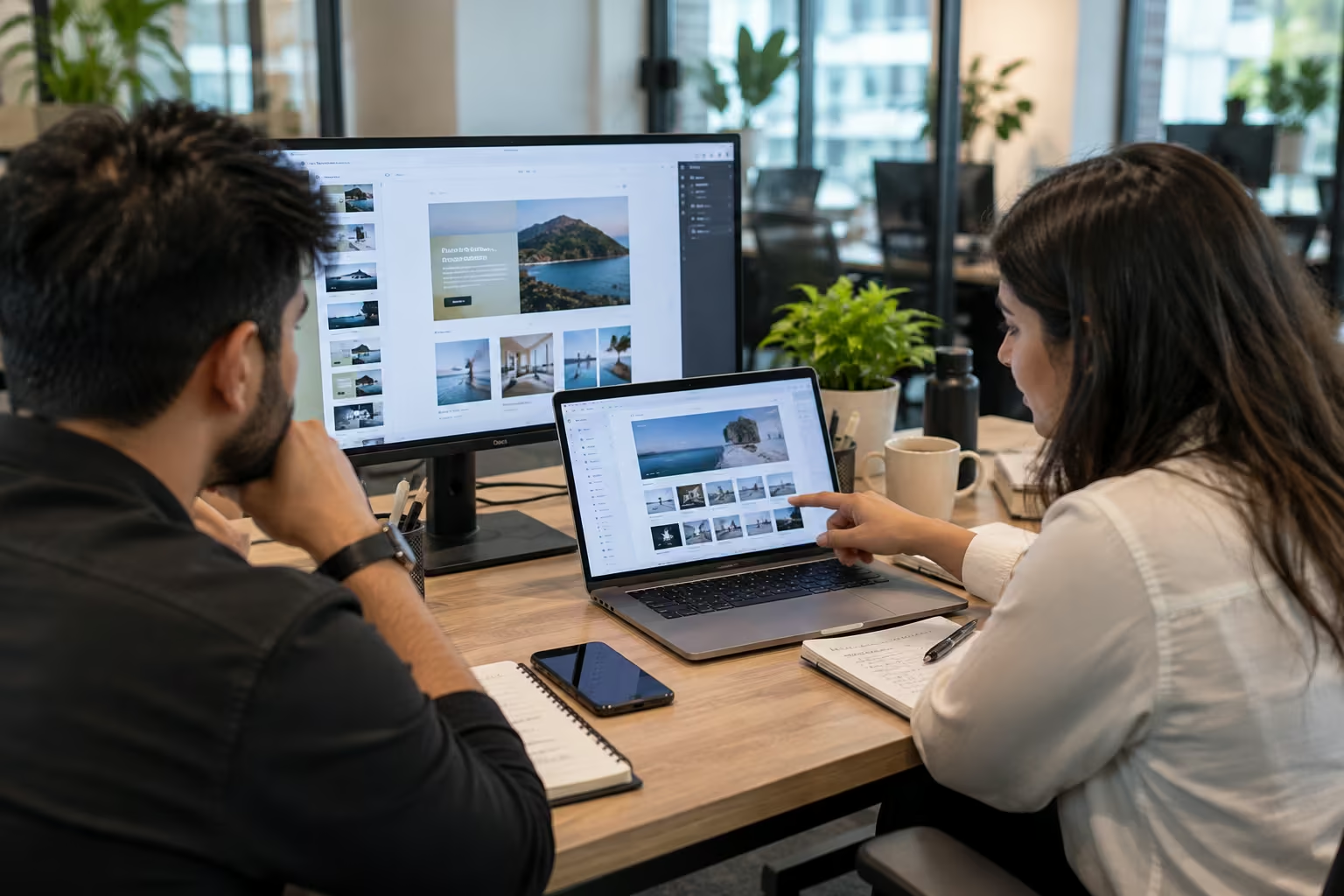
AI website builders can turn a short business description into a credible-looking first draft in minutes. But generating pages is not the same as deciding what a website must communicate, how visitors should move through it or what should happen after launch.
The direct answer: choose an AI website builder when the site is simple, the risk of getting it wrong is low and someone on your team can review the content, layout and accessibility. Choose a professional web designer when the website must differentiate your brand, support a complex customer journey, connect with other systems or earn trust in a competitive market. For many established small businesses, the best answer is a hybrid process: use AI to accelerate exploration, then rely on human judgment for strategy, visual direction, user experience and quality assurance.
There is no universal winner. The choice depends on the value of the visitor's decision—not merely the number of pages.
Why this decision matters more in 2026
Prompt-based site creation is no longer a novelty. Wix's current AI website builder can generate a business-ready draft from a conversation and then move into manual editing. Squarespace Blueprint AI creates an editable website draft with pages, sections, content and styling. Shopify's AI Store Builder generates store designs from a short business description, while the WordPress.com AI Website Builder produces layouts, images and copy from plain-language instructions.
These tools reduce the effort required to reach a first version. They do not remove the need to understand customers, prioritize information, verify claims or check mobile behaviour. The useful question is no longer “Can AI build a website?” It is “Which parts should be automated, and which decisions deserve expert attention?”
What an AI website builder actually does
An AI website builder combines a conversational brief with a platform's components, styles and content tools. You describe the business, refine a direction and edit the assembled pages before publication.
Its main advantage is momentum: a blank screen becomes a structured draft. That can be valuable for a straightforward brochure site, event page, portfolio or early concept.
The limitation is context. A model knows your prompt and its platform's options. It does not automatically know customer objections, your sales process, what evidence you may publish or what makes your brand recognisable. A generic brief usually produces a generic result.
What a professional web designer contributes
A professional designer should do more than select colours or make a page look polished. The work begins with questions: who is the visitor, what do they need to understand, what creates hesitation and what is the most valuable next action?
Those answers shape the information architecture, hierarchy, responsive behaviour, interactions and visual system. A designer can also challenge a weak brief and create rules that keep new pages consistent.
A professional project need not be coded from a blank file. Designers may use a CMS, tested components and AI tools. Their value lies in decisions, adaptation and verification—not making every step manual.
AI builder, professional designer or hybrid?
| Decision factor | AI builder | Professional designer | Hybrid approach |
|---|---|---|---|
| First draft | Usually fastest | Slower discovery, more direction | Fast exploration with review |
| Brand distinction | Depends heavily on the brief | Built around a visual system | AI options, human art direction |
| UX strategy | Pattern-led | Research and journey-led | Human-owned, AI-assisted |
| Accessibility and QA | Tools still require review | Planned and tested | Expert checks before launch |
| Custom integrations | Limited to platform options | Specified around requirements | Platform first, custom where needed |
| Ongoing control | Owner manages within platform | Handoff and governance can be defined | Shared workflow and documented rules |
Use this as a decision guide; platform capability and project scope still need verification.
The hybrid approach only works when responsibilities are clear. AI can generate alternatives or accelerate low-risk production; a person must decide what is accurate and useful.
When an AI website builder can be enough
An AI-first route can be sensible when:
- You need a simple one-page presence or temporary campaign page.
- The site's purpose, audience and primary call to action are already clear.
- Your content does not involve complex products, regulated claims or many decision paths.
- Built-in forms, scheduling or commerce features meet your needs without unusual integrations.
- A responsible person can rewrite the generated copy, replace generic imagery and test every page.
- You are treating the first version as a learning tool, not a finished brand system.
For example, a local consultant with one service, a clear enquiry form and a small set of approved testimonials may be able to launch effectively with a builder. The owner still needs to confirm that the site sounds like the business, works on a phone and tells visitors what happens next.
When professional design is the safer investment
Expert support becomes more valuable as the cost of confusion rises. Consider professional website design when:
- The website is central to sales, bookings, fundraising or recruitment.
- Several audiences need different paths through the same site.
- Brand distinction matters because competitors offer similar services.
- Paid campaigns will send expensive traffic to the pages.
- The site needs custom calculators, account areas, multilingual flows or third-party integrations.
- Accessibility, security, legal review or content governance carry material risk.
- A redesign must preserve content, redirects, analytics or ecommerce operations.
A professional process can save time when no internal owner exists. A low-cost builder becomes expensive when several people repeatedly revise pages without shared rules.
Eight questions to answer before choosing
-
1. What must the visitor do?
Define one primary outcome for each important page: enquire, book, buy, compare, subscribe or understand. If every section competes, the priorities need work first.
-
2. Is the content ready?
Generated copy may sound plausible without being accurate or persuasive. Collect real service details, policies, proof, common questions and approved brand language before publishing.
[POOJA: Add or confirm one anonymized example of a missing content decision that delayed a real website project, if publicly shareable.]
-
3. How distinctive must the brand feel?
For a short test, a conventional style may be acceptable. For a long-term asset, define typography, colour, imagery, spacing, tone and component rules.
-
4. What functionality is genuinely required?
List forms, payments, bookings, inventory, CRM connections, languages and permissions. Verify each requirement before committing; one unsupported workflow can make a beautiful draft a dead end.
Make the method serve the business
The best website is not the one created with the newest tool or the longest design process. It is the one that helps the right people understand the offer, trust the business and complete the next step without unnecessary friction.
VR Web Studios' public agency profile documents web design and development work across platforms including WordPress, Shopify, Wix and Magento, while its official company portfolio directory includes websites created by the team. If you are deciding between an AI builder, a redesign or a more tailored website, explore our Web Designing services, review our Web Development capabilities or contact VR Web Studios for a requirements-led recommendation.
